I was all scheduled to give a talk at tomorrow’s Minnebar 16 entitled “Silico-Paleontology: Using graph databases to analyze evolved programs”. Than, last night, my left knee cap decided to slide off to places it didn’t belong, and I ended up in the ER where I received a very stylish knee brace/immobilizer. I’m fine, and … Continue reading "Silico-Paleontology: The Minnebar 16 talk that wasn’t"]]>
Warning: Undefined array key "HTTP_REFERER" in /home/unhinder/www/www/Phi/wp-content/plugins/google-hilite.php on line 58
Even more annoying, I’d finally gotten around to scheduling a talk, and now that’s not happening either. I’ve thought pretty seriously about giving some sort of talk since I attended my first Minnebar in 2013, but the timing has always gotten in the way. Usually these things are in April, when the semester/school year is getting quite chaotic, and the best of intentions run up against the realities of the job, and the talk always losing.
This year, though, Minnebar is in the first week of June! So there was really no reason not to submit a talk, and I did. Several people had expressed interest on the website, and I was really looking forward to sharing some of the research work I’ve done with UMN Morris students over the years, meeting some new folks, etc., etc., etc.
My knee, however, had other thoughts.
And so when I would planning to be arriving in the Cities and checking into a hotel, I’m sitting here with my leg propped up babbling on the Internet. Sighz.
If there’s time maybe I’ll write up a short version of the talk here, and if folks would be interested in more we can go from there.
]]>There have been few times in my life when I have felt more free, more myself than when reading to and performing with our son. Reading to him helped me rediscover my love of performing, and of story. Singing with him helped me rediscover my love of song, and music as a thing made. In … Continue reading "Thanks, Tom"]]>
Warning: Undefined array key "HTTP_REFERER" in /home/unhinder/www/www/Phi/wp-content/plugins/google-hilite.php on line 58
Reading to him helped me rediscover my love of performing, and of story.
Singing with him helped me rediscover my love of song, and music as a thing made.
In those moments we were deeply together, sharing experience richly, across the three decades that persistently endeavor to separate us.
In those moments I was me, not any of the formal presentations of myself. And that freedom drew us together, hand in hand. Two people, ageless, sharing a love of tune and tale and, more often than not, a certain level of silliness.
When he finds himself mired in those tough questions of how to repay the things our parents did for us, I hope he remembers this.
And knows we’re all good.
]]>The Emperor of All Maladies: A Biography of Cancer by Siddhartha Mukherjee My rating: 5 of 5 stars A truly beautiful book about what is certainly a terrible and often terrifying collection of illnesses. Our family, like almost all families, has wrestled with cancer and wrestled with the scary and frequently devastating treatments that hope … Continue reading "Review: The Emperor of All Maladies: A Biography of Cancer"]]>
Warning: Undefined array key "HTTP_REFERER" in /home/unhinder/www/www/Phi/wp-content/plugins/google-hilite.php on line 58

The Emperor of All Maladies: A Biography of Cancer by Siddhartha Mukherjee
My rating: 5 of 5 stars
A truly beautiful book about what is certainly a terrible and often terrifying collection of illnesses. Our family, like almost all families, has wrestled with cancer and wrestled with the scary and frequently devastating treatments that hope to kill the cancer before they kill the patient. This book provides a rich and illuminating context for those struggles, giving a palpable sense of the diseases and how our understanding and approaches have changed and how they’ve stayed the same. Mukherjee’s story telling is deft and compelling, sharing a complex and often very technical history in a way that remains personal, compelling, and accessible. It at times borders on the poetic, but without ever becoming sentimental or maudlin.
While this is technically about cancer, the book provides valuable insight into the complexities of medical research, whether scientific, mathematical, political, or social. We’ve made huge strides in so many areas of medicine in the last two centuries, but we rarely appreciate the oft tortured, surprising, and complex channels wended along the way. Yet to understand cancer and cancer treatment, and important challenges such as antibiotic resistance, and drug R&D, funding, testing and approval, it’s critical that we have this sort of context.
So most highly recommend; absolutely one of the best books I’ve read.
]]>The Heart of Everything That Is: The Untold Story of Red Cloud, An American Legend by Bob Drury My rating: 3 of 5 stars An interesting history of Red Cloud and a moment where the northern plains Indians briefly stemmed the tide of the U.S. advance across the west. Like so many of these histories, … Continue reading "Review: The Heart of Everything That Is: The Untold Story of Red Cloud, An American Legend"]]>
Warning: Undefined array key "HTTP_REFERER" in /home/unhinder/www/www/Phi/wp-content/plugins/google-hilite.php on line 58
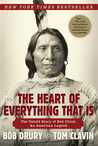
The Heart of Everything That Is: The Untold Story of Red Cloud, An American Legend by Bob Drury
My rating: 3 of 5 stars
An interesting history of Red Cloud and a moment where the northern plains Indians briefly stemmed the tide of the U.S. advance across the west. Like so many of these histories, it’s frustratingly thin on material from the Indian perspective, despite the existence of an “autobiography” of Red Cloud that apparently played an important role in the writing of this book.
So I found the book interesting and I learned some valuable things about that history, but in the end really wanted to read Red Cloud’s “autobiography” directly.
]]>Oh, let me count the ways: – No free WiFi. In 2015. Soon they’ll be handing out candles. – It reminds me of changing planes in O’Hare in the 70’s (& that’s not a Good Thing). – The only map I could find was on a big display panel which spent 3 or 4 times … Continue reading "Newark Airport: How do you annoy me?"]]>
Warning: Undefined array key "HTTP_REFERER" in /home/unhinder/www/www/Phi/wp-content/plugins/google-hilite.php on line 58
– No free WiFi. In 2015. Soon they’ll be handing out candles.
– It reminds me of changing planes in O’Hare in the 70’s (& that’s not a Good Thing).
– The only map I could find was on a big display panel which spent 3 or 4 times as long displaying ads as showing me the map. I’d swear that it actually sensed my attention and flipped over to ads on purpose.
– No free WiFi. Seriously.
– Lots of fake variety in the food choices, with banks of “different” restaurants all fronting a single big kitchen churning out the same fries.
– Clearly not enough bathrooms. Saw way too many lines coming out of the ladies.
– God awful lines at the security checkpoints. Luckily I was on the “right” side, but the queues did not look fun.
And the views of the area are, well, pretty industrial. To be fair most airports aren’t in the most scenic of neighborhoods. Still, Newark Airport seems to live in a particularly stark pit of the universe. If I landed here at the start of a visit to the US, I’d certainly wonder if I should turn around and head home rather than venture out into that wasteland.
I’ll go see where we get our candles in case it gets dark before we leave.
]]>25 years ago today, in a move of at best questionable judgment, Susan Gilbert married a scrawny geek from Texas. The wedding was on her turf, in Preston, England, and all her friends and relatives came out. Aunts and uncles, cousins, and even her grandparents in what was probably their last major family outing. Tons … Continue reading "The best thing that ever happened to me (25 years on)"]]>
Warning: Undefined array key "HTTP_REFERER" in /home/unhinder/www/www/Phi/wp-content/plugins/google-hilite.php on line 58
The wedding was on her turf, in Preston, England, and all her friends and relatives came out. Aunts and uncles, cousins, and even her grandparents in what was probably their last major family outing.
Tons of family and friends from my side came as well, from all over the United States and Canada, from elsewhere in Europe. I think it was my grandmother’s last international trip.
Most of the guests stayed in the Tickled Trout Hotel on the banks of the River Ribble. (You really can’t make names like this up.)
The American guests were terribly impressed with how old the church was. It was from the 1800’s and was in fact a fairly new church by local standards; the church in the city centre has parts from the 1500’s and history back five centuries farther. The reception, though, was in a manor house that was several hundred years old, older than anything European in the New World, and that felt satisfyingly Olde Worlde to us gringos from over the pond.
The organist struggled something fearsome. The wedding was truly wonderful in almost every possible way. But the organist was another matter. The crazy thing is that no one but Susan and I heard it. When we mentioned it after the ceremony, people were like “No, the organist was great!” and we were like “Really, the organist sucked.”. The video later proved us right.
After threatening rain, the weather held the end, and we had a wonderful after-reception party at Sue’s parent’s house. People milling and chatting in the back garden, in the sun.
Nearly everybody stayed that night and came together again the next day for, of all things, a birthday party for me. Only after that last grand gathering did the bride and groom leave for our honeymoon, traveling first to Vienna and then to Budapest, where we had met four years earlier and fallen in love.
And now here we are, living in Minnesota with our crazy cool 20-year-old kid and a cat that projectile sheds. We are in the midst of repainting the house in colors at least two people independently described as gingerbread, but which we defiantly think of as Scandinavian. Our big anniversary present to ourselves is a new computer; apparently 25 is silicon in the modern universe.
Figuring out how to pack up our books is one of the big challenges of our upcoming sabbatical, and our big goal for the year is to make art together.
And I wouldn’t have it any other way. In fact it’s hard to imagine it any other way.
The common refrain from my family at the time was that Susan was the best thing that ever happened to me. 25 years later it’s still just as true.
Looking forward to another 25, dodgy knees and all :-)
Love you!
]]>Warning: Undefined array key "HTTP_REFERER" in /home/unhinder/www/www/Phi/wp-content/plugins/google-hilite.php on line 58

Our good friend Jane pointed out that our “Make Tea Not War” shop on CafePress had fallen quite badly out of date, as CafePress has added, removed, and altered product options.
She was apparently looking to replace a bag that had died after several years of use, and kept getting an “out of stock” response. Looking at it from our end suggests they don’t make that kind of bag anymore, and perhaps haven’t for quite some time. Sighz.
To be honest, we mostly set that shop up so we could buy stuff for ourselves, and we don’t pay a ton of attention to it. We occasionally get a couple of bucks because some random stranger buys one of our bits and bobs, but I’m not sure we’ve ever made enough to take the three of us out to a cheap meal. This is partly because we don’t really do anything to promote our wares, but the lack of movement also doesn’t particular encourage us to put in a lot of effort watching the store.
Hence the rather nasty drift in the product line. It turns out that CafePress has added a bunch of items since I’d last paid any attention, as well as discontinuing a few. I updated things some, removing obviously discontinued items, and adding our lovely, hand-calligraphed “Make Tea Not War” slogan to a bunch of new bags, ranging from fancy messenger bags to nice looking little lunch bags.
And hey, you know that tea goes way better with lunch than war does. Way better.
]]>Congratulations on making it this far. Being a science and space nerd from an early age, I’ve looked at a lot of maps of the solar system over the years, but I don’t think I’ve ever enjoyed one as much as “If the Moon Were Only 1 Pixel – A tediously accurate map of the … Continue reading "If the Moon Were Only 1 Pixel – A tediously accurate map of the solar system"]]>
Warning: Undefined array key "HTTP_REFERER" in /home/unhinder/www/www/Phi/wp-content/plugins/google-hilite.php on line 58
Congratulations on making it this far.
Being a science and space nerd from an early age, I’ve looked at a lot of maps of the solar system over the years, but I don’t think I’ve ever enjoyed one as much as “If the Moon Were Only 1 Pixel – A tediously accurate map of the solar system”.
It’s sort of a philosophical side-scroller game (with no point) based on science. Or, actually, it’s a nice essay, presented in a somewhat unusual form, on the difficulties we humans have wrapping our heads around things that aren’t of a human scale, like the solar system.
“Sorry, Humanity,” says Evolution. “What with all the jaguars trying to eat you, the parasites in your fur, and the never-ending need for a decent steak, I was a little busy. I didn’t exactly have time to come up with a way to conceive of vast stretches of nothingness.”
It’s fun and informative and definitely worth scrolling past all those zillions of miles of darkness to find the next snarky little remark or, if you’re really lucky, an actual planet :)
With so much emptiness, aren’t stars, planets, and people just glitches in an otherwise elegant and uniform nothingness, like pieces of lint on a black sweater?
(It also shows off some pretty shiny webdev tools and design, which made a different part of my nerdliness happy.)
Big thanks to Josh Broton for the pointer:
]]>“If the Moon Were Only One Pixel” http://t.co/iJClVbJ6mi
I literally nerded out at 100% intensity with this.
— Bro(ton)grammer (@joshbroton) March 7, 2014
Warning: Undefined array key "HTTP_REFERER" in /home/unhinder/www/www/Phi/wp-content/plugins/google-hilite.php on line 58

L to R (starting at the little wall):
- Two "old" pieces, our bios, & price list. The top piece ("Beyond the rim") is a sculpture of Sue’s made from wood and human hair. The bottom piece is a photo of mine from the train tracks here in Morris.
- "Askance" – a large profile of Sue.
- "Thought full" – a very large shot of the back of Sue’s bald head leaning slightly forward.
- (Turning the corner) "Emergence" (top) – 2 horizontal shots of *very* short hair growing back in. "Home" (bottom) – Her very freshly shaved head.

L to R:
- A group of 3 all coming from Sue having me use henna to tattoo "No freedom without privacy" onto the back of her freshly shaved head. First is a close up of the dried henna, the strip in the middle shows her hair growing back through the tattoo and the tattoo fading over time, and the third is a B&W shot from when the henna was still wet.
- Lastly, a diptych of two very large "pages" of 420 different photos of Sue taken over a 3 month period as her hair grew back.
The Prairie Renaissance Cultural Alliance (PRCA) asked us about possibly doing a show together this time last year, assuming (I think) that we’d just collect some of her sculptures and some of my photographs, and call it a show.
We both felt, however, that if we were going to do a show together, we wanted to do a show together, so we asked if we could wait a year and assemble some new, joint material in the meantime. The result was this collection of photographs (by me) of her head; in essence she laid the tableau through various treatments of her head as a sculptural object, I shot a metric crapton of photos, and then we sifted through them together and assembled this collection.
While it’s only 8 pieces, it uses over 500 separate photographs out of the nearly 10,000 we shot over the course of 2013 for this project. (We shot over 7,000 images from late February to early May alone!) We also chose to make some very large prints, with the 8 pieces covering nearly 100 square feet of wall. I really love printing large, but rarely can justify it, so it was quite wonderful seeing some of these big prints. :-) The original plan for the big diptych was to have a single piece, 6 feet tall by 8 feet wide, but we couldn’t find anyone that could do art quality photo printing that big, which is why we ended up dividing it into two “pages”.
For folks in the area, the show opens Wednesday, 13 Feb, and there’s a reception Sunday, 16 Feb, from 7-8:30pm.
]]>Warning: Undefined array key "HTTP_REFERER" in /home/unhinder/www/www/Phi/wp-content/plugins/google-hilite.php on line 58

In a desperate bid to not to be outdone by our amazing progeny, Sue and I will be hanging our first collaborative art show next week at the Prairie Renaissance Cultural Alliance (PRCA) Gallery! The kind folks at the PRCA actually approached us about doing a joint show last year; there really wasn’t time to put it together then, but we agreed to do something this year.
In many ways the “simple” approach would have been a combination of Sue’s recent sculpture and my photography. We really wanted this to be a collaboration, though, and over the course of the year we worked together on a collection of photographs documenting her use of her body (in particular her head) as a canvas. Thousands of photographs were taken (over 7,000 in a single three month period!), forming the source material for the pieces that we’ll be hanging. Sue laid out the tableaus, I shot the hell out of them, and then we worked together to figure out what images to use and how.
Portraiture is one of the oldest of artistic disciplines, often providing an “objective” (or at least objectifying) view of the individual. These images examine an artist, Susan Gilbert, at work, capturing her use of her own head as canvas. Some of the photographs are disconcerting both in their underlying subject, and in their focus and presentation. Some are overtly political in their content, while all comment on how we see those around us and respond to change. No single image is the “true portrait” of the artist; they are all fragments of a whole, distorted by the cultural lens through which they are viewed.
The show includes the biggest photographic prints we’ve ever made (the largest is 60″x40″) and it’s quite something to see the work (and Sue’s head) that huge! We also have a diptych of collages that are 6 feet tall and together over 8 feet wide, so we definitely decided to “Go big or go home!”.
We’ll hang the show next Saturday (8 Feb) and the show will open on the 12th. There will be a reception at the gallery on Sunday, 16 Feb, from 7-8:30pm, where you’ll be able to publicly question our sanity while eating nummy snacks!
]]>