The Heart of Everything That Is: The Untold Story of Red Cloud, An American Legend by Bob Drury My rating: 3 of 5 stars An interesting history of Red Cloud and a moment where the northern plains Indians briefly stemmed the tide of the U.S. advance across the west. Like so many of these histories, … Continue reading "Review: The Heart of Everything That Is: The Untold Story of Red Cloud, An American Legend"]]>
Warning: Undefined array key "HTTP_REFERER" in /home/unhinder/www/www/Phi/wp-content/plugins/google-hilite.php on line 58
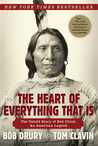
The Heart of Everything That Is: The Untold Story of Red Cloud, An American Legend by Bob Drury
My rating: 3 of 5 stars
An interesting history of Red Cloud and a moment where the northern plains Indians briefly stemmed the tide of the U.S. advance across the west. Like so many of these histories, it’s frustratingly thin on material from the Indian perspective, despite the existence of an “autobiography” of Red Cloud that apparently played an important role in the writing of this book.
So I found the book interesting and I learned some valuable things about that history, but in the end really wanted to read Red Cloud’s “autobiography” directly.
]]>This blast from the past was taken in the mid-70’s and features a much younger (but no less geeky) yours truly, his squirt of a sister, and our dad. Me Just turned 50 Just celebrated 24 wonderful years of marriage to a woman I couldn’t have dreamed of meeting when this was taken Have a … Continue reading "How things change, and how they stay the same"]]>
Warning: Undefined array key "HTTP_REFERER" in /home/unhinder/www/www/Phi/wp-content/plugins/google-hilite.php on line 58

This blast from the past was taken in the mid-70’s and features a much younger (but no less geeky) yours truly, his squirt of a sister, and our dad.
Me
- Just turned 50
- Just celebrated 24 wonderful years of marriage to a woman I couldn’t have dreamed of meeting when this was taken
- Have a 19-year-old son, making him quite a few years older than me in the picture
- Work in computing (not much of a surprise to someone who knew me then)
- Teach for a living (probably a lot less obvious when this was taken)
- Have more than a little gray hair to document the years in between :-)
Misty
- About to turn 46
- Turned out to be the actual outdoorsperson in the family (we were a little slow to figure that out – gender stereotypes weigh heavy in the world)
- After traveling through an undergraduate degree in music history, got a PhD in biology and now teaches animal behavior and conservation at UW Oshkosh
- Is biking this summer (with her awesome dog in a trailer behind her!) from Ann Arbor, MI, to Ithaca, NY (I consider biking the 15 minutes across the Mississippi into downtown Minneapolis without dying an accomplishment)
- Also turned out to be a teacher for a living, and an exceptional one at that (I suspect our mother has something to do with that)
- Got to do field work in cool places like the Galapagos and Turkey (yeah, I have biologist envy)
- Also has more than a little gray hair to document the years in between :-)
Dad
- About to turn 83
- After living for decades in Wichita Falls, TX (where Misty and I essentially spent our whole lives before going away to college), moved to Houston for roughly a decade
- Then retired to NW Arkansas, where our folks still live an incredibly active life
- Got really involved in the NW Arkansas jazz scene and knows all the celebs
- Rediscovered (with Mom) his love for bridge, and they get invited to play with some pretty serious heavy hitters which is super cool
- Joined with a submariner veterans group in NW Arkansas and has become a lot more connected to his experience on subs during the Korean War
- Fishes as much as circumstances allow, but physically managing the boat and the truck and the gear, etc., etc., is proving tougher. Luckily he’s got friends that help a lot.
- Has beaten cancer twice, but it hasn’t been easy and those battles have definitely left their marks
The crazy thing, though, is how much this old picture resonates with now. My sister and I have changed a ton, but my Dad still looks a lot like that. Thomas, Dad, and I went trout fishing on the White River in Arkansas last week, and it was pretty much just like I remember events like this picture. A few weeks before that, he and Misty went fishing in Lake Michigan near Green Bay. While we were in Arkansas, he and I took the recycling to the recycling center. He came with me to the car place while they looked at a rattle. We went to a picnic hosted by his submariners group. We listened to live jazz over a Sunday brunch. A lot of the details have changed, but the broad brushstrokes are still very recognizable; it’s definitely our strange, happy family.
Since she’s not in the picture, I end up pretty much ignoring my wonderful mother in this, which isn’t really cool. She just turned 75 and totally rocks, and is the rock of the family in so, so many ways. I suspect that while we were fishing she was back at the camper, bravely enduring the “great outdoors” when she would have much been somewhere with indoor plumbing :-). Love you Mom!
]]>I’d hoped to share these thoughts with McNamar in person, but it’s now unclear that he’ll be coming to town today, so I’m sending them instead. Last week I saw “42” at the movie theatre here in Morris. It’s a powerful portrayal of Jackie Robinson and Branch Rickey’s breaking of the color barrier in Major … Continue reading "The arc of history: An open letter to Jay McNamar"]]>
Warning: Undefined array key "HTTP_REFERER" in /home/unhinder/www/www/Phi/wp-content/plugins/google-hilite.php on line 58
Last week I saw “42” at the movie theatre here in Morris. It’s a powerful portrayal of Jackie Robinson and Branch Rickey’s breaking of the color barrier in Major League Baseball, an important early step in a historical arc that runs within living memory from the service of blacks in WWII through school desegregation, the Civil Rights Act, and the election of Barack Obama as President.
The arc of history is long, but it bends towards justice. — Martin Luther King
Growing up in Texas in the 60s & 70s, gays were almost completely invisible, even more invisible than than the black maids that came across from the other side of town in the morning, and disappeared back in the evening. Our son grew up in the 90s and 00s here in Minnesota with numerous openly gay friends; another arc is playing out across the social and political landscape. And like the arc Branch Rickey and Jackie Robinson helped bend towards justice, this new arc will play out over time. Just as women eventually won the right to vote, and a black man was elected President, we will eventually decide that the secular, legal idea of marriage is more about love and commitment than it is about gender.
So the question is, what role do you want to play when that movie is made? When our children and grand-children look back at this moment, will they see you on the right side of that arc, or as a supporter of the frightened, shrill, bitter voices that are the contemporary version of those hurling insults at Robinson?
You are our elected leader, and the history books will record your name next to that vote, not mine. You will certainly have to explain your vote in the months to come, but you also have to explain it in the decades hence. As the arc continues to bend, a vote for humanity and inclusion is going to be a lot easier to explain, and probably a lot easier to live with.
I most earnestly urge you to vote in favor of expanding the legal right to marriage, and wish you the best in your deliberations.
Sincerely,
Nic McPhee
]]>So I’ve been a pretty good boy while here in Minneapolis, and have left my camera back at the B&B every day, focusing instead on important things like course prep. Yesterday, though, I gave myself one day of photography, focusing on St. Anthony Falls, the Mill District, the Mill City Museum, and the Guthrie Theater. … Continue reading "A golden view (& a little history of Minneapolis)"]]>
Warning: Undefined array key "HTTP_REFERER" in /home/unhinder/www/www/Phi/wp-content/plugins/google-hilite.php on line 58

So I’ve been a pretty good boy while here in Minneapolis, and have left my camera back at the B&B every day, focusing instead on important things like course prep. Yesterday, though, I gave myself one day of photography, focusing on St. Anthony Falls, the Mill District, the Mill City Museum, and the Guthrie Theater.
While I was in the Guthrie I made my first trip up to the 9th floor where the Dowling Studio is. The 8th and 9th floors are mostly for education and cutting edge work, and the architect felt that this called for yellow windows to ensure that the people working there always had a "sunny" view. I’m not sure I buy that argument, but I must say that they provide a really amazing view of the city, including this shot back across to the old Mill District and the great Gold Medal Flour sign. So the weird colors here aren’t my doing, and nothing in Photoshop, but are the result of shooting through several inches of yellow-tinted glass.
If you’ve been to the Guthrie, but never been up to the 9th floor, I definitely recommend it. To get there you have to catch an elevator at either the 4th or 5th floor (only staff can use that elevator to go to the 1st floor) and head up to the 9th floor. It’s totally cool to go there, because that’s how you get to the Dowling Studio, which is the third and much smaller theater at the Guthrie. I was there in the mid-to-late-afternoon, and the light was really interesting, but I suspect that it changes quite a lot all through the day.
In all my wandering around I also learned a ton about the origin of Minneapolis (which I’d known almost nothing about). I’d always assumed the Cities were here primarily because of the confluence of the Minnesota and Mississippi rivers, but no! Minneapolis is all about the water power of St. Anthony Falls, the only waterfall of note on the entire Mississippi River. This initially powered sawmills which sliced up the northern forests into planks, and then drove the amazing flour milling industry that for 50 years made Minneapolis the largest producer of flour in the world.
Most of the old mills are gone, but there’s are bits of a few, including this old General Mills grain elevator and the shell of the adjacent mill that now houses the Mill City Museum.
Fascinating stuff, and a really fun day of taking photos.
Conveniently yesterday’s prompt from The Daily Shoot was
Make a photograph that features a sign of some sort today. Maybe a stop sign. Maybe an information sign. Or an advert.
Hey, I took a lot of photos of signs (many, in fact, of this wonderful Gold Medal Flower sign), so here you are.
]]>The BBC in conjunction with the British Museum is putting on a new series this year, “A history of the world in 100 objects”. Neil MacGregor, Director of the British Museum, has chosen 100 objects from their remarkable collection to illustrate the sweep of human history, ranging from early stone axes through modern icons such … Continue reading "A heartfelt plug for “A history of the world in 100 objects”"]]>
Warning: Undefined array key "HTTP_REFERER" in /home/unhinder/www/www/Phi/wp-content/plugins/google-hilite.php on line 58

The BBC in conjunction with the British Museum is putting on a new series this year, “A history of the world in 100 objects”. Neil MacGregor, Director of the British Museum, has chosen 100 objects from their remarkable collection to illustrate the sweep of human history, ranging from early stone axes through modern icons such as credit cards. Each object gets a 15 minute episode broadcast on BBC Radio 4, and available on-line and as a podcast.
They’ve finish 4 weeks (or 20 episodes), and the objects and their stories have been consistently engaging and informative. Some standouts have been the carving of the swimming reindeer, the Egyptian clay model of cattle, and the Rhind mathematical papyrus, but it’s awfully hard to choose favorites when the quality has been this good. If I had to pick just one out of what they’ve broadcast so far, it would probably be the Jomon pot episode. This type of pottery changed the way we understood the development of this crucial technology, and the way these objects were revered in Japan thousands of years later is quite wonderful. This particular pot, made some 7,000 years ago, was valued so highly a few hundred years ago that it was lined with gold and incorporated into the tea ceremony.
I’ve been to the British Museum several times over the years, and taken way too many photos there. (A few on my “main” Flickr account, and way too many on my events account.) One thing that’s been cool about the series is that in the first 20 episodes there was only one object that I remember seeing and actually photographed: The statue of Ramesses II up above. He’s huge and pretty hard to miss there next to the Rosetta Stone. Many of the objects in the series have been small and subtle, however, which nicely illustrates the value of a cool program like this. Some objects are pretty remarkable in and of themselves, but others benefit enormously from a guide who suggests we slow down and really look at this stone or that statue. Here MacGregor and his guests help us understand the significance, context, and impact of these objects, and totally make me want to go back to the Museum and seek these treasures out.
There are some other objects in the series that I’ve seen and photographed (such as the Assyrian Reliefs below), but most of them will be new to me. I’m eagerly looking forward to the remaining 80 episodes!

If you haven’t seen this amazing show reel from Danny MacAskill, it’s time to stop what you’re doing and gawk. In fairness, I think the opening trick on the cast iron fence is perhaps the best thing in the video, but it’s totally worth the price of admission – hard for me to imagine doing … Continue reading "Everything old is new again, bicycle tricks edition"]]>
Warning: Undefined array key "HTTP_REFERER" in /home/unhinder/www/www/Phi/wp-content/plugins/google-hilite.php on line 58
In fairness, I think the opening trick on the cast iron fence is perhaps the best thing in the video, but it’s totally worth the price of admission – hard for me to imagine doing such a thing.
Then, for a little context, check out this Edison footage of bike tricks from 120 years ago. Sure, it’s not MacAskill, but it’s a whole ‘nother era in terms of gear, both bike and camera, and it would be interesting to see what Neidert was able to do without the constraints of a small stage and a short one-take camera set-up.
I don’t remember who on Twitter tipped me to the MacAskill video; vitjan via Shadowhand gets the thanks for the Edison footage.
]]>